MOSF 19.8: “Didi”: Insecurity, Dissociation, Cringe, and Sense of Self (EAAPAAO Part 6)
Memoirs of a Superfan Vol. 19.8: “Didi”: Insecurity, Dissociation, Cringe, and Sense of Self (Everything Asian American Psychology All At Once Part 6)
by Ravi Chandra August 5, 2024
Like “Inside Out 2,” “Didi” explores integrating a teen’s inner world. Cross-posted at Psychology Today.
My favorite cinematic moments are those of reunions and children eating. They both are heart-touching in ways that never grow old, though I’m now a older-middle-aged softie, eligible for AARP membership. But typically, at middle age, our inner child shows up for our attention, distressing us with their unmet needs and memories suppressed as best possible as we climb career ladders, masking our vulnerabilities behind a performative face, creating splits between our adult self and challenging identity experiences along the way.
W.E.B. Du Bois described “double consciousness” in 1903 for the specifically Black American experience of being split between the consciousness required for white culture, and hidden truths primarily revealed to other Blacks, but just as importantly, making it difficult for some to form a cohesive sense of self. “Code-switching” can consciously lean into the split by being aware of the consciousnesses held in different groups.
Dissociation
This is all related to what analysts call “dissociation.” Dissociation is a fractionation of the self into layers of identity and insufficiently communicating “parts.” Cundy and Shahar write
“Psychological dissociation is The Surreal. It is an amalgamation of thoughts, emotions, and behaviors that share the common denominator of challenging the way we experience self and world. Dissociation is not merely altered consciousness, it is an attack on consciousness: on memory, identity, and goal-directed action. Freud titled it ‘Unheimlich’, improperly translated as ‘The Uncanny’ (see also Sullivan on uncanny emotions), and for Bion it was the outcome of attacks on linking.”
They cite syndromes and symptoms including depersonalization, derealization, dissociative amnesia (also known as fugue states), self-compartmentalization, and dissociative identity disorder. We might add “the impostor syndrome,” daydreaming, being “of two minds” and ambivalent, and more severe intrapsychic and cultural splits, such as the one between the far Right and extreme Left in politics, or between extremists of any stripe and idealists grounded in shared humanity, like myself.
Eng and Han wrote of racial dissociation in their book Racial Dissociation, Racial Melancholia, tying the impact of abusive power, specifically racism, to Asian Americans’ distressed psyches and relatedness.
Watching children eat and seeing reunions helps us integrate our “past lives,” to use the title of Celine Song’s Oscar-nominated 2023 film. Love and compassionate recollection in safe transitional spaces are a great antidote to dissociations, personal and cultural, and open the door to integrations and creative reassociations. (For more on dissociation, see Psychology Today’s topic page on the subject.)
A Coming-of-Age Story
Thirty-year-old director Sean Wang has already been Oscar-nominated for his documentary short Nai Nai and Wai Po about his Taiwanese grandmothers. His newly released debut feature Didi (meaning little brother in Mandarin) is billed as a “coming of age” story, and it is that. But it is also a very specific and sensitive look at Asian American boyhood, family, and psychic needs. It spotlights dissociating pressures on a teenage boy and the difficulties of gathering a sense of self, under burdens of racism, self-conscious insecurity and anxieties (not unlike the anxieties of Riley in Inside Out 2), and, most significantly, the cringe of shame. (SPOILERS AHEAD!)
The film follows Chris Wang (played to brilliant perfection by Izaac Wang) and begins with a boyhood prank, captured on video and uploaded to YouTube. YouTube, MySpace, Facebook, and AOL Instant Messenger represent refuges and exciting new territory but also dissociations from the life shared with his family, a more positive dissociation than Kayla in Bo Burnham’s Eighth Grade. His parents are dissociated: they are immigrants, and his dad lives elsewhere sending money home to his mother Chungsing (played by Joan Chen). Chris is in regular, heated conflict with his older sister Vivian (Shirley Chen). And while he loves his paternal grandmother (played by one of Sean Wang’s real-life grandmothers, Zhang Li Hua), she acts as a punitive superego to his mother, creating a split between what his Nai Nai would consider ideal and his mother’s actual humanity. And all the women of the household are at some remove from his needs as a boy.
His friends (South Asian and East Asian American) bond with him with a mix of roughhousing, kindness, and slights, and he later bonds with a multiracial, mostly white group of skateboarders, one of whom sometimes acts as a mature older brother, but the group also leads him into a chaos and a drug-induced dissociation that will frighten immigrant Asian American parents in particular, I think—a version of their worst nightmares about what faces their children in America, but one that ends with Chris’s sister taking care of him, at least. And some of those Asian American parents might hear themselves in the high-octane catastrophizing coming from both mother and grandmother—it was laugh-out-loud familiar for the audience I saw the film with!
Cruelty and Casual Racism
Didi is further dissociated by experiences of cruelty and casual racism from his peers. He doesn’t react to comments such as the love-of-his-young-life saying “you’re cute for an Asian guy,” but they will sink into the surreal interior, and likely haunt him until he finds a way to name racist microaggressions. He cringes with shame at his perceived “otherness” and lashes out in rage at his sister, mother, and a bullying peer when they poke his shamed, shunned identity. These moments of rage are paradoxically both momentarily integrating for Chris and highly stressful for the family system. Chris’s relational experiences provide fragmented, episodic, incomplete mirroring that reflects and receives but also rebuffs him, leaving a complicated interiority that will require both expression and compassion to come to greater cohesion.
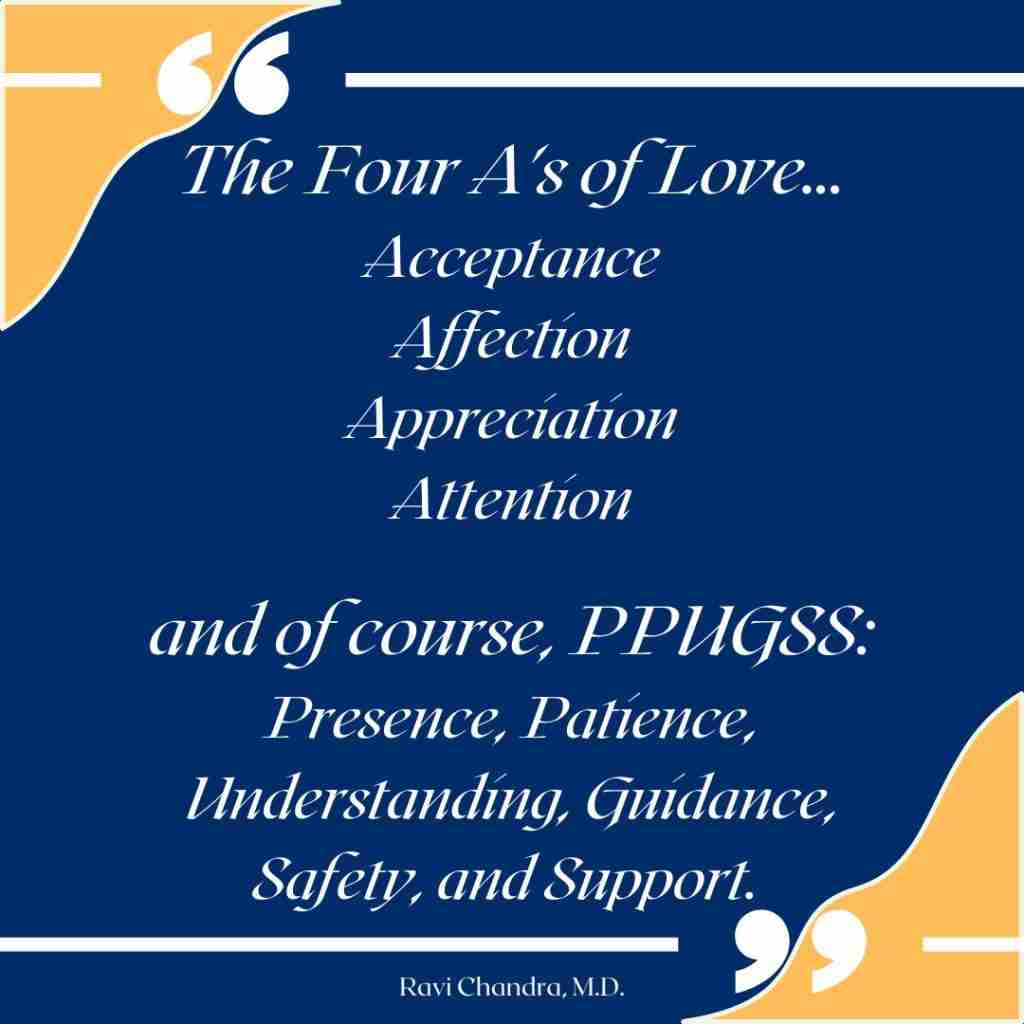
A sense of self consists partly of beliefs about oneself and relational experiences. Is it any wonder that dissociation seems particularly pronounced in an individualistic culture where social comparison outweighs social connection, where we chase ourselves in looks, achievements, wealth, and status only to lose ourselves in the process while promoting a contingent self-worth? Chris intensely craves being liked, to be seen as capable and good enough, and through these, to like himself—all parallel to Riley’s challenges in Inside Out 2. Unlike Riley, though, he does not have the holding environment of her particular fully settled white family, with all its emotional attunement, attention, safety, guidance, support, and acceptance. So he is experiencing more dissociation and greater challenges to his sense of self and the ability to experience joy.
But, fortunately for him, the women in his life—his grandmother, his sister, and, ultimately, his mother—hold him in his most painful moments. In the final scene, his mother watches him eat, her eyes and heart clearly brimming with unconditional love. Did I mention I like reunions and children eating?
In summary: see Didi, and allow the film to bring compassion to all the cringes of your past lives. Films like this can be a route to integration of our collective and specific dissociations and traumas, as Asian Americans and individuals traveling in the surreal collectivity we all share as inhabitants of our tiny blue marble, spinning alone together in the endless dark.


 A sense of self consists partly of beliefs about oneself and relational experiences. Is it any wonder that dissociation seems particularly pronounced in an individualistic culture where social comparison outweighs social connection, where we chase ourselves in looks, achievements, wealth, and status only to lose ourselves in the process while promoting a contingent self-worth? Chris intensely craves being liked, to be seen as capable and good enough, and through these, to like himself—all parallel to Riley’s challenges in Inside Out 2. Unlike Riley, though, he does not have the holding environment of her particular fully settled white family, with all its emotional attunement, attention, safety, guidance, support, and acceptance. So he is experiencing more dissociation and greater challenges to his sense of self and the ability to experience joy.
 A sense of self consists partly of beliefs about oneself and relational experiences. Is it any wonder that dissociation seems particularly pronounced in an individualistic culture where social comparison outweighs social connection, where we chase ourselves in looks, achievements, wealth, and status only to lose ourselves in the process while promoting a contingent self-worth? Chris intensely craves being liked, to be seen as capable and good enough, and through these, to like himself—all parallel to Riley’s challenges in Inside Out 2. Unlike Riley, though, he does not have the holding environment of her particular fully settled white family, with all its emotional attunement, attention, safety, guidance, support, and acceptance. So he is experiencing more dissociation and greater challenges to his sense of self and the ability to experience joy.
