
MOSF 20.13: Raoul Peck’s “Orwell: 2+2=5”: An epic, brilliant, evocative, necessary near-miss
Memoirs of a Superfan, Vol. 20.13: Raoul Peck’s “Orwell: 2+2=5”: An epic, brilliant, evocative, necessary near-miss
by Ravi Chandra
October 25, 2024
The new film breaks a lot down, but leaves something to be “desired.” Cross-posted at Substack, where I’ve been doing a lot of writing.

I rescheduled a couple of patients in order to see Raoul Peck’s new film Orwell: 2+2=5 at the Big Roxie. It felt necessary. I desired a guide to our unfortunate mess, and an appreciation for both Orwell, whom I read in high school, and Peck. I’ve loved Peck’s prior films. (I Am Not Your Negro, about James Baldwin, and Exterminate All the Brutes, a four episode HBO doc-series about racism and colonialism.)
Control, authoritarianism, fascism, surveillance, and abuse, in support of the militaristic and egotistic ambitions of nation states and cruel men and sometimes women, are obviously themes that need to be underscored at this moment, this crossroads.
The afternoon was sunny, warm, and hyperreal. An enjoyable lunch and walk through the Mission. A chance meeting with an old friend, which ended in hugs and kindness. Fortuitous parking spaces. As we entered the theater, we were told that due to an electrical issue, they were unable to turn off the safety lights in the back. How appropriate, I thought to myself. An electrician was summoned. Maybe our challenges are really only technical. Maybe we only need a bit of customer support. Maybe we all need to recognize that we need to be patient with each other, accept who we are, and find contentment in the moment, even as we search for growth in the precious, elusive source of happiness we carry within and between us.
The Traveling Wilburys – End Of The Line (Official 4K Music Video)
Orwell: 2+2=5 was powerful, overpowering, and heady. It will soon debut on Apple TV, and I plan to watch it again. Probably. Either that or live out its sequel, always pushing for a happy ending.
I’m not sure if the problem is that “we” are being watched, or I am watching myself too closely in this strange mix-up. As I’ve traveled to our moment, I’ve rigorously deconstructed and avoided paranoia about online surveillance, even as friends were tripping out about the many ways that our lives routinely intersect with big banks, corporations, and governments. There’s a part of me that says “fine, track me.” And another part which knows that there’s something about each of us which is untrackable: spontaneous, intimate, playful, and always capable of enormous creativity and growth.

But with these phones in our pockets, we’ve always got eyes on us. To be tracked is to potentially be controlled, even as our phones connect us. We have reason to be ambivalent. We have a right to know how our data is used. We have a right to be sure our data won’t be used to harm us. Yet oligarchs and totalitarian states clearly do not care about rights. Our rights depend on functioning democracy, and democracy is broken, perhaps fatally. At this moment, I’m not even sure government will ever reopen.
This may be it folks. The end of the line. But we’ve had many dark nights of the soul in our personal and collective journeys. The answer in these times may not be to overreach for complexity, but to revel in simplicity, simple pleasures, and sympathetic joy. As Audre Lorde put it:
“Caring for myself is not self-indulgence, it is self-preservation, and that is an act of political warfare.” –– Audre Lorde

 From “End of the Line”
I wrote in Facebuddha: Transcendence in the Age of Social Networks:
“I also see Mark Zuckerberg and his cohort as (profitable) prophets of online connection, the Chosen Ones who represent the collective American psyche’s response to 9/11 and the ongoing challenges to our civic and communal life. In a world of newfound danger, the 9/11 generation found technological ways to establish contact, a sense of safety, trust, camaraderie and shared identity. That the NSA’s mandate overlapped precariously with these ideals is another subject entirely, either unhappy synchronicity or subterranean, even subconscious, conspiracy based on fear instead of love. But both forces vie through technology, as they do throughout life. Post 9-11, we needed to amplify the messages of both solidarity as well as control in the face of destructive forces of division.”
Now, 8 years later, I would say that our problems could be summarized as a fear of intimacy, fear of intimacy with the new, the different, the unknown, the “other.” In an expansive world we somehow feel claustrophobic, threatened, too close and yet not intimate, with ourselves or each other. And not just fear of intimacy, but radical rejection of intimacy in favor of “boundaries,” walls, and cruel games of domination, erasure, and elimination, prominently palpable in Gaza and Ukraine, but visible just down the street.

Society is the sum of our love … but we are in love drought, aren’t we? It’s distressing to be unceremoniously dropped into the no-man’s land of deprivation, a zone where cruel judgments prevail, where your problems in love and life are because there’s something wrong with you, and not because you were always an underdog in a lifelong struggle with the battleship of biases.
Ah, but all you had to do was drop to your knees, repent for your sins, and love Big Brother, friend. Remember, Big Brother will save you.

I’ll just put a pin on it. Is Christ a crime, or a necessary adjunct? My view is that Christ is horrifically disfigured and dissociated, meaning different things to different people, and dangerously down a rabbit hole of amassing power to totalitarian aims, marked most hideously by a surveillance state policing speech, behavior, and (this is weird) attempted control of thoughts and emotions. The archetype of Christ has been mobilized as a weapon of mass seduction and cult mind control, aimed predominantly at forcing capitulation, rather than “spiritual transformation.” I don’t know if Christ or Christianity are salvageable. But I know a bit about working with dissociation and cult mind control.
Love, creative expression, and the world create new possibilities, new experiences, and new understandings. Orwell did not anticipate people dressed in inflatable animal costumes protesting fascism. Instead of Animal Farm, we have Animals, ReFramed. There are great possibilities in reframing and restoring our connections to the natural world.


And the longest journey is from the head to the heart.
Sometimes I feel tantalizingly close. I just need someone there with me. We all do. But how do we appreciate ourselves? How do appreciate others? I would say there’s far, far too much depreciation, shit coming downhill from the battleship of biases, with its poop plane.

The fear of intimacy tangles with needs for companionship, guidance, and love. We cannot give up on these, no matter where we are headed. But as Cautious Clay sings:
I’m so afraid of intimacy…
And I think that loneliness will serve us well
Cautious Clay – Stolen Moments (Live) | Vevo DSCVR Artists to Watch 2020
Loneliness is a great teacher. What arises in our lonely moments is a great teacher, and something that actually connects us, as a “universal human transmission.”

Recently, I’ve run into several people who claim to not complain. It’s strange, because complaining is a human and American pastime. Most of my job is listening to complaints. I think people are suggesting they would rather sublimate or stuff their issues rather than externalize, like Mr. Trump does. But self-regulation is a myth. We all need each other. We depend. We interdepend. We lean. There’s always tension between self-regulation and co-regulation. Suffering is a crisis in connection, and the opposite of suffering is belonging. And even affects (emotional experiences) need belonging as well, both internally and in community. As I’ve been saying since the so-called ceasefire in Gaza, “grief needs friends. If it doesn’t have them, it will make them.” This is not a threat, but a reality.

We need to go deeper than “not complaining,” I think. We need to compassionately connect to the universal human transmissions that have come to us from centuries. In 2021, I wrote:
History’s primary transmission is in feeling. Countries, systems and families break down, or work as designed and let down, in particular, marginalized individuals and groups, leading to eruption of dissonance and more subtle betrayals of affection. This leads to feelings: strong, ugly and minor.
Orwell saw authoritarianism in practice, in Burma, Nazi Germany, Spain, and in his own life. The film shows scenes from Burma, Gaza, and January 6, 2021, driving home the point and the plight. Orwell knew that some men would seek to control others, and he foresaw totalitarian state control. We fear that our technological tools will control or master us. We fear that AI will obliterate us. We fear that we won’t be able to deal with real and manufactured dissatisfaction.

What Orwell did not foresee was growth in culture, science, and human intelligence. He did not foresee how fast insights and emotions can spread.
In 1984, Winston Smith’s intimacy with Julia serves as a human possibility against the Big Brother’s inhumanity. The dystopia of state control vies with a seemingly minor utopia of shared love between them.
But is love really so minor? Or does it just feel dangerous? So dangerous that we’ll use any means to avoid it, suppress it, fight with it, foil it for others?
Maybe Orwell’s dystopic vision really came from his lived experience that love could not face down the state. There may always be a “heavy” as we struggle towards love and compassion, a heavy who throws salt in our wounds.
What if he was wrong? What if the odds aren’t as long as he made them?
Personally, I think we got this one. If we just take the time out to love someone.
Orwell didn’t anticipate Stevie Wonder. He didn’t know Bob Dylan. He never met The Traveling Wilbury’s, or Art Blakey and the Jazz Messengers. He didn’t know King, or Mandela.
He never met you, or me.
He didn’t know anything about umami, the dash of friendliness and compassion that makes our inner lives and relatedness more tasty and delicious.

We got this.
Stay tuned, tune into yourself, and see you again soon.
Stevie Wonder: Take The Time Out
Art Blakey and the Jazz Messengers: Time Will Tell
Bob Dylan: Gotta Serve Somebody
NewsHour, October 12, 2025 Documentary argues George Orwell’s greatest fears are materializing NewsHour YouTube, October 12, 2025
Documentary argues George Orwell’s greatest fears are materializing PBS NewsHour website, October 12, 2025
Dargis M. ‘Orwell: 2+2=5’ Review: How George Came to See the World as Orwellian. New York Times, October 3, 2025 (Gift Article)
Chandra R. Jesus, The Three Wise Men, and Universal Human Transmissions. The Pacific Heart on Psychology Today, December 21, 2021
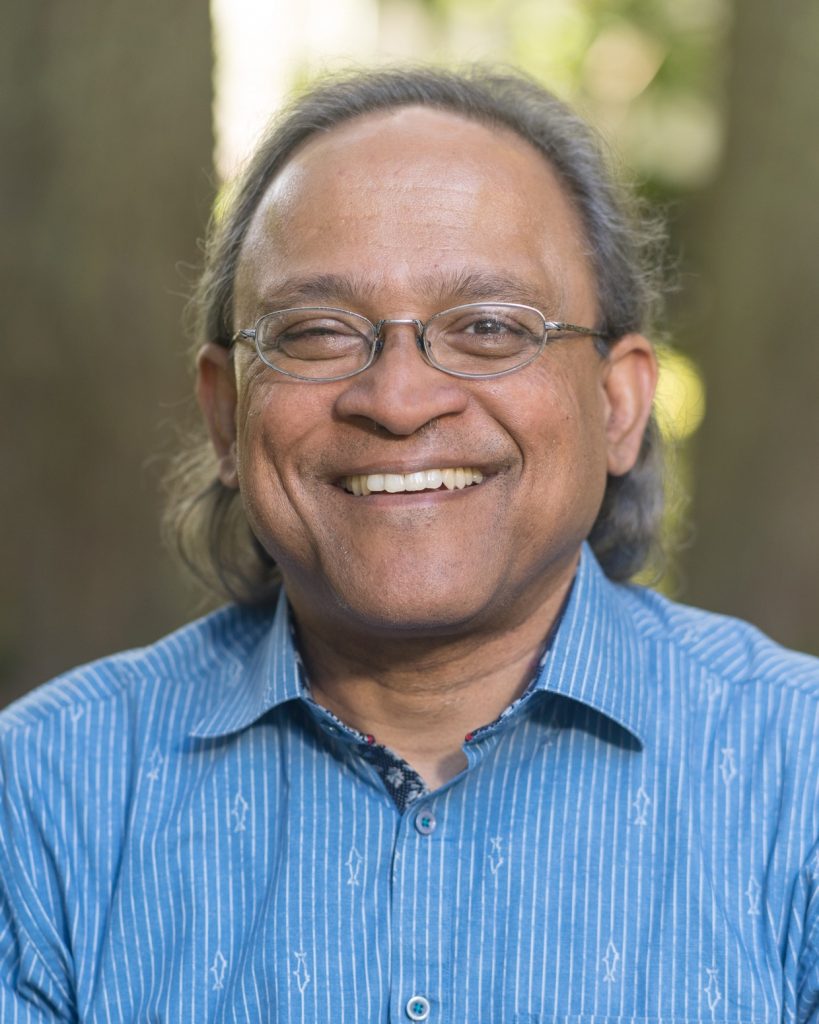
 Photo by Bob Hsiang, 2022