
MOSF 20.12: “107 Days” by Kamala Harris – Diagnosing a Broken System (But One That Raised You)
Memoirs of a Superfan, Vol. 20.12: “107 Days” by Kamala Harris – Diagnosing a Broken System (But One That Raised You)
by Ravi Chandra
October 6, 2025

I finished reading 107 Days on an October 1st descent to Washington, D.C. How appropriate. I started reading the book eagerly the day it was released, September 23rd, but the universe kept me busy with work until the five-hour plane ride to the nation’s capital for a psychiatric advocacy conference and day on the Hill, now in contingency planning because of the government shutdown. I absorbed Kamala’s words as I crossed the continental United States, resonated with them coast-to-coast, her thoughts and spirit mingling with mine and perhaps the entire nation below in our shared journey of hope, loss, and anguished antagonism. A breach has opened, a wound, and we are in it.
We had a narrow defeat last year. 107 days could have led to triumph, but instead we lived the slender success of biases and lies, and are now in the corpulent and corporate rollout of autocracy, the “experiential learning lab” for the Advanced Fascist Studies course someone signed us all up for. In the University of Life, we now have a special division in the School of Hard Knocks which is a cross between Squid Games, Game of Thrones, and It’s a Wonderful Life sans George Bailey, written alternatingly in comic sans and blood.
Mr. Trump, President Shrimp, has apparently given up governing in favor of owning the news cycle in an attempt to control the American psyche, to make all eyes and minds revolve around him, the Emperor with no clothes who lives rent-free in our minds. He and cronies such as Russell Vought and Elon Musk have destroyed our government and the pathways of compassion built up over decades. They are laying waste to the House of Empathy we have struggled to build, however imperfectly.

 Image by Tony West, from Harris’ selection as Joe Biden’s VP pick.
We are on our back feet, looking back with regrets, and surveying our bleak landscape for signs for hope as storm clouds thunder. As I wrote in my last Substack, “our country is now the training ground for psywar,” the cold war of dangerous rhetoric, economic sanctions for dissent, and surfacing violence, from partisan to xenophobic to nihilistic and “accelerationist.”
Harris’ book can be read as a testimony and signal fire for girls and women to come, for democracy to come. I felt sobs well in my chest and throat so many times while reading her account of last year that I started highlighting those surfacing moments in pink in my e-book, to distinguish them from many other notable passages. Reading this book was essential to mourning, though it naturally triggered what-ifs. I am still partly in the bargaining stage of grief, I suppose, while Kamala seems to be in mature, healthy acceptance and resolve. However, the acceptance she comes to is bracing indeed.
“What we the people must understand is that the dismantling of our democracy did not start with the 2024 election.
The right-wing and religious nationalists have played the long game, working for decades to take over state houses, gerrymander districts, and dominate local government boards. Their think tanks like the Federalist Society created the blueprint for stacking the Supreme Court, while the Heritage Foundation created Project 2025.
Their plans have been amplified by the rise of a right-wing media ecosystem built to operationalize their agenda through massive propaganda, misinformation, and disinformation. Trump was their vehicle, his road paved for him, years earlier, by a hot and pungent brew: Ronald Reagan’s celebrity, Newt Gingrich’s belligerent discourse, and Pat Buchanan’s nativism.

Don’t be duped into thinking it’s all chaos. It may feel like chaos, but what we are witnessing is a high-velocity event, the swift implementation of an agenda that was written many decades ago.
“This is how fascism begins,” warned Françoise Giroud, a journalist who served in the French Resistance. “It never says its name. It creeps, it floats. When it reaches the tips of people’s noses, they say: ‘Is this it? You think? Don’t exaggerate!’ And then one day it smacks them in the mouth, and it is too late to get rid of it.”
It is not too late for us, but we need to think both strategically and tactically.”
…I wanted to make change from inside the system.
Today I’m no longer sure about that. Because the system is failing us. (Emphasis mine.)
…In this critical moment, working within the system, by itself, is not proving to be enough.
I’ll no longer sit in DC in the grandeur of the ceremonial office. I will be with the people, in towns and communities where I can listen to their ideas on how we rebuild trust, empathy, and a government worthy of the ideals of this country.”
– Kamala Harris, 107 Days
107 Days is #1 on the New York Times Bestseller list, probably perplexing Carlos Lozada and the other NYT reviewers, who gave the book (and Kamala) essentially scathing reviews, laced with cyanide and side-eye. Veteran political book reviewer (and here seemingly inveterate cynic) Lozada writes “the title is not merely the duration of Harris’s campaign; it is also her excuse for losing the election.” He inserts excerpts of Clive James’ poem “The Book of my Enemy Has Been Remaindered,” in his dialogue with other reviewers, displaying glee at his hoped-for failure of Harris’s book, thus advancing the project of his resentment and contempt for an exceptional political leader, rather than accept the possibility that he, the political pundit class, (and the country) wasn’t good enough for her, didn’t understand, really, what happened to her and what is happening to us. He quotes:
“In 107 days, I didn’t have enough time to show how much more I would do to help them than he ever would,” Harris writes. “And that makes me immensely sad.”
He does not quote another passage:
“One hundred and seven days were not, in the end, long enough to accomplish the task of winning the presidency.
But we accomplished other things, as I learn every day.”
To see Harris as a responsible, earnest warrior, loyal to democracy, America, and Americans, deeply insightful, appreciative, and in gratitude to multitudes whom she steadfastly represents and heartwarmingly names, one after the other in recognition of the supportive family and community she helped create over many decades – and yet a defeated lion in winter – is a bridge too far for Lozada, a card-carrying member of the political class. He channels an almost Trumpian contempt for her opus and thus her person and her project. Now, I respect Lozada, and respect what he’s got his eyes on. But I think he’s wrong.

 “Rosa sat so Ruby could walk so Kamala could run.”
In Lozada’s eyes, Kamala holds back on personal accountability and avoids critiquing President Joe Biden, while allowing others to sporadically make that case. David Plouffe, for example says “people hate Joe Biden.” She does allow, in the book, that leaving the decision to run for a second term to Joe and Jill was, in hindsight, more recklessness than grace. She is perplexed why Joe calls her shortly before her debate with Trump, seemingly to check if she had been throwing him under the bus. Hello, insecurity my old friend. Many social anxious patients will be pleased to learn that they are not alone in wondering what people really think about them. And a deep bow to context-sensitivity – being hung up on what other people might be thinking of you than finding ballast in what you think of yourself, and relationship to reasonable and responsible observers.
If you don’t cultivate your balance between the two poles of self – who one is to others and who one is to oneself – you’ll have a rocky road indeed. If Kamala is wondering (in the words of Mindy Kaling’s memoir) “is everyone hanging out without me?” the answer is yes, if “everyone” is Lozada and the power-player-maker-layer of the political class, all head and snark and little heart, because to them, messaging, strategy, manipulation, and personality are what wins elections, not the deeper building blocks of connecting with people and their struggles.
I think many people are in fact hanging out with Kamala. We know her type, and we like it. It’s done well by us, and is a success no matter what the chattering class says.

 Kamala. For the PEOPLE.
But the power players are busily dumping her, and I think they are confused. What’s worse, they are certain they’re right, and they’ll do their best to convince you and all their pals too. In this way, the “thinking apparatus” of the culture will fail to connect with the people’s reality, as they search for an invulnerable, heroic leader to toss into the titanic personality-on-personality struggle they’ve learned to curate, and which the Trump/MAGA/UFC/Fox contingent has learned to manipulate to their advantage as they all turn into calculating, cynical, nihilistic, heartless … lizards.
“Power, on the throne, gets confused,” says a Kenyan woman in the documentary How to Build a Library. This is only an extension of the vulnerability and confusion inherent in being human. The power-player-maker-layer doesn’t want to deal with vulnerability and confusion, so they lean into visions of their own analytic power. It’s always been easier for the pundits to punch down at Democrats on their back feet than hold Trump and MAGA’s feet to the fire, or really explore the fundamental confusions that come from setting course on a sea with many variables, including that fundamental one of “how do I get people to like me, in a country with bias against people like me? That is ready to hurl lies at me and all my relations?”
Why is it so easy for a clearly horrible man like Trump to get liked, and relatively harder for Kamala? The white and power-and-image oriented media apparatus made him a celebrity for forty years. He matched the biases of the culture. He amplified primal resentments in perceived loss of status in the less-educated White majority, and loss of wealth and power in the benighted segment of the wealthy White conservative elite. And their “hero”, the faux-billionaire, sold economic know-how like P.T. Barnum could sell a Brooklyn Bridge. Trump hides his confusion and idiocy behind grandiosity, and America has a grandiosity fetish that keeps it primed for delusion. Bias, bullying, and bullshit ruled the roost over reality.

I experienced, I lived, Kamala’s campaign like it was a godsend. And her defeat was “the devil’s work” indeed. I loved this book. But there were moments of disappointment in the retelling for me as well.
First, I wish Harris took more time to explain joy, her chosen theme of uplift. To me, this was a perfect and noble means of meeting suffering and difficulty with reason and compassion. But the pundit class seemed to think it was naïve. Joy has been a tool of resistance and renewal in the Black community, and I saw Harris as trying to bring this advanced technology to the electorate. But people bought into fear, xenophobia, transphobia, disinformation about economics, and (marginally) bias against a biracial woman candidate. I think last November was more about electoral colic, generalized and weaponized dissatisfaction, and throwing the bums out than deep-seated and overwhelming hatred, though. If only joy had been paired with “I’m new and different than Joe” more, maybe she could have turned the tide.
Kamala explains Joy to The Grio last September,
and Mark Leibovich gives his take on the failure of joy as strategy and movement builder post-election, in December, 2024.
Second, in the vein of new and different, I was heartbroken that she passed on her “first choice” of Pete Buttigieg as running mate. Pete is a brilliant, once-in-a-generation politician. You would have had to go hard to convince me to not run with him, especially if he was my “first choice” as Kamala says he was. Maybe she did push to run with him. But in the book, she makes it sound like she made the cold calculation that running with a gay man, as a biracial Black woman, was a bridge too far for the American electorate at this time.
Now we’ll never know.
I think standing in stellar uniqueness and also deeply shared humanity could have been the winning combination. If only Harris had spoken to the people, fully, about her first choice and why she loved him so much. What a spectacularly transformative campaign that would have been. It. Could. Have. Changed. Everything.
Now we’ll never know. But I know what’s in my heart.

Finally, I wish Kamala would have gone harder against the disinformation and transphobia that apparently cost them 2.7% in the battleground states. That’s not just a political calculation, it’s a compassionate and human call to our best selves. Harris states that the campaign’s decision was to pivot from trans issues to economic issues – which apparently were losers for them in the public’s eye as well.
Hard pass for me. Again, you would have had to go HARD at me to not forcefully stand up for vulnerable members of our community, be they migrants, immigrants, BIPOC, queer, trans, poor, or simply compassionate and feeling left out. I’m not saying she didn’t do it, but I’m really pissed at whoever persuaded her to soft-pedal a direct counter-offensive against the ads that said “she’s for they/them, Donald is for us.” She does say she should have said “I’m for We the People,” but c’mon. Donald Trump, Stephen Cheung and their pals went hard core low and primal – and you went “high”? Again? No. Kick him in the nuts. He says he’s a “man?” Well, let’s get into what kind of man he is. Or at least draw a contrast.
“Maybe my good friend and future Vice President Pete could tell him a thing or two about being a man.”
End. Of. F*^#ing. Story.
Again, now we’ll never know. But I know what’s in my heart.
Kamala, you’re still in my heart.
The political class, like Lozada (and this morning, Jonathan Chait in The Atlantic) think the Democrats lose with progressive politics and diversity. These guys are not in my heart. They’re in their heads someplace, and even there, quite disconnected from the body of the America I know. They’re unwilling or unable to see the psychological warfare, the issues of cognition and moral character, the disinformation and undue influence. It’s all persuasion, policy, and power to them.

Elizabeth Mendez Berry and Chi-hui Yang wrote in 2019 about the “dominance of the white male (film) critic,” who just didn’t understand the stories and storytelling of BIPOC filmmakers. I made the same point in watching movies such as Vivian Bang’s White Rabbit and Domee Shi’s Turning Red. I would make the same case for the political class, from consultants to journalists such as Lozada and Chait. They just don’t get it. Not to say that they’re to be dismissed – because unfortunately they form part of the (dysfunctional) “thinking apparatus” that essentially produces our political discourse. They’re part of the “system” that Kamala tells us is broken.
Because we have such a broken system – or a system that is working as designed, against us – we’ve all got to have each other’s backs.
Start by cracking the spine of this book.
Read it not on our descent – but as foundation for our dissent. And majority opinion to come. One built of compassion, reason, and relationship, all the things which have made Kamala, and us, strong.
Coda: A day after I published this, I realized “107 Days” matches 10/7. A painful synchronicity which aches for meanings, but ultimately resonates with grief and continued trauma. May we all be free of suffering, violence, and abusive power, from Israel and Gaza and Palestine, to the world.
Lozada C. Kamala Harris Is Out of Time. New York Times, September 20, 2025 (Gift article)
Cottle M, Lozada C, Polgren L. Harris’s Memoir Is Another Example of the Democrats’ Problem. New York Times, September 27, 2025 (Gift article)
Szalai J. What Happened in the 2024 Election? Kamala Harris Has Some Thoughts. New York Times, September 18, 2025 (Gift Article)
Berry EM, Yang C. The Dominance of the White Male Critic. The New York Times, July 5, 2019 (Gift article)
Chandra R. Memoirs of a Superfan, Volume 13.6 – Asian American Han. May 14, 2018
Chait J. Democrats Still Have No Idea What Went Wrong. The Atlantic, October 6, 2025
Chandra R. Cultivating Sense of Self to Cope With Trauma and Life. Psychology Today, July 24, 2024
Chandra R. The Context-Sensitive Self: Anxiety vs. Sociopathy. Psychology Today, August 9, 2021
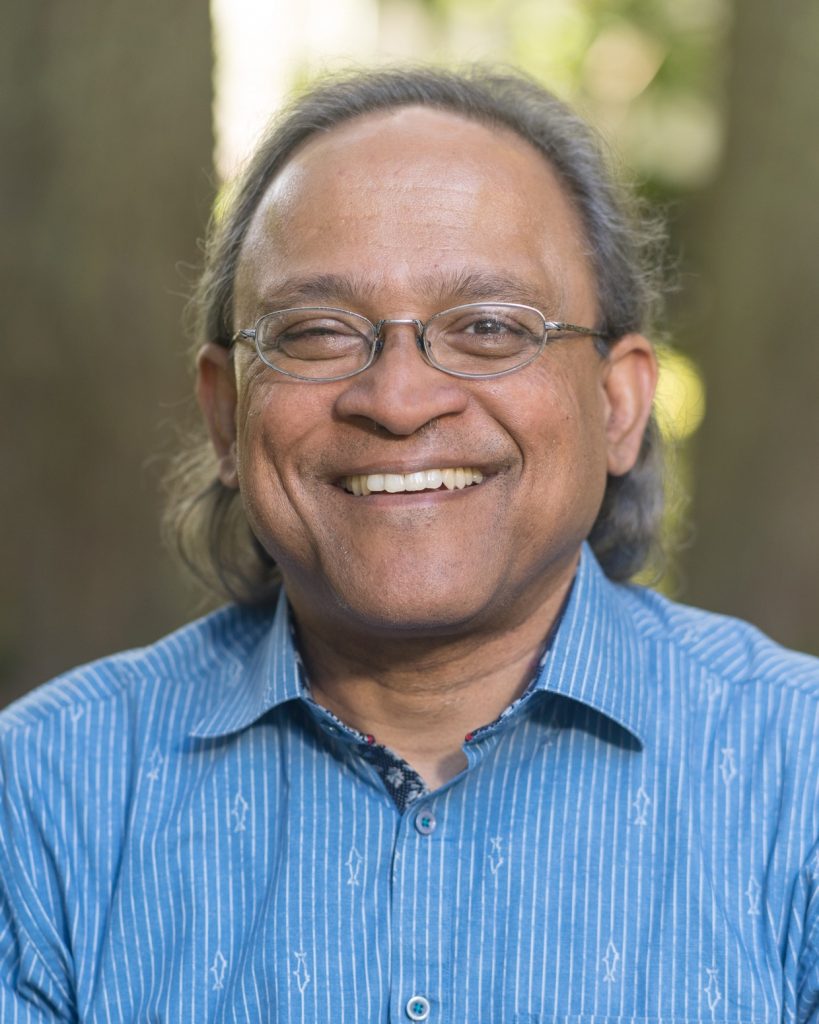
 Photo by Bob Hsiang, 2022
Joy was the desired positivity attracting us to Kamala of certainty of her winning the presidency for the well-being of all Americans including the marginalized instead of the hatred espoused to rile up his supporters to vote for him, hatred of immigrants destroying our country, hatred of hard-working Joe prioritizing covid, and then doing more than recovering our economy, his Build Back Better Biden plan for fixing problems, the infrastructure, new jobs with Science/Chips, climate Control, new sources of clean energy, overpriced medications, affordable healthcare insurance, wealth inequity, minimal 15% taxes for billionaires. Kamala added child care, new home and small business incentives for increasing the well-being of all Americans.
I wish Kamala had time to counter the misinformation and disinformation from the opposing party because voters believed it. Pete Buttigieg would have been a great VP, contending well in the 2020 campaign, and rebutting criticisms for the Dept of Transportation after the fatal plane crash.