
MOSF 19.20: Post-2024 Election: Preventing Psychopathy and Cruelty From Going Viral (Hate speech breaks brains, and can break society)
MOSF 19.20: Post-2024 Election: Preventing Psychopathy and Cruelty From Going Viral (Hate speech breaks brains, and can break society)
by Ravi Chandra
November 13, 2024

 Adobe stock image by akun, licensed by Ravi Chandra
President-elect Trump’s victory has already emboldened right-wing men to post misogynistic taunts and harassment on social media (Salon, November 8, 2024). American extremists have called for violence against communities Trump has targeted. Black and other BIPOC people have reported receiving racist texts and social media messages. And authoritarians, far-right extremists, and racist street activists worldwide have cheered Donald Trump’s victory. These are ominous signs for civil society, mental health, and social well-being. We need to pay vigorous attention to our emotional, relational, and informational ecosystems to create the possibility for a more, and not less, compassionate society along with enhancing safety and well-being, especially for vulnerable people and populations.
History gives us examples of cruelty and psychopathy going viral. In 1930s Germany, Hitler began with a purge of his political enemies, and this soon extended to the Holocaust, resulting in the killing of 6 million Jews, gays, the disabled, and those not considered “pure” by his vile standards. The 1994 Rwanda genocide was foreshadowed by cruel, derogatory hate speech, which philosopher Lynne Tirrell has called the “canary in the mine.”
Philosopher Karl Popper defined the “paradox of intolerance” as a threat to free societies—that if intolerance is tolerated, then it may in fact become rampant and overrun the norms of civilized society. In modern days, we have seen how anger, hate speech, and disinformation can run viral on social media, leading to violence and other highly damaging consequences for societies around the globe, in India, Sri Lanka, Myanmar, and the United States.
Hate speech can become viral through these mechanisms:
It lands on and inflames pre-existing cultural biases (such as racism, misogyny, xenophobia and nativist/anti-immigrant bias, antisemitism, homophobia, transphobia, able-ism, etc.).
It promotes an idealization of self and contempt of others deemed different, other, or “less than.”
It can numb the brains of listeners to the perspectives of others. Hate speech has been shown to impair the right temporoparietal junction and other brain circuits, leading to depersonalization, decreased perspective-taking, and erosion of empathy. (See references.)
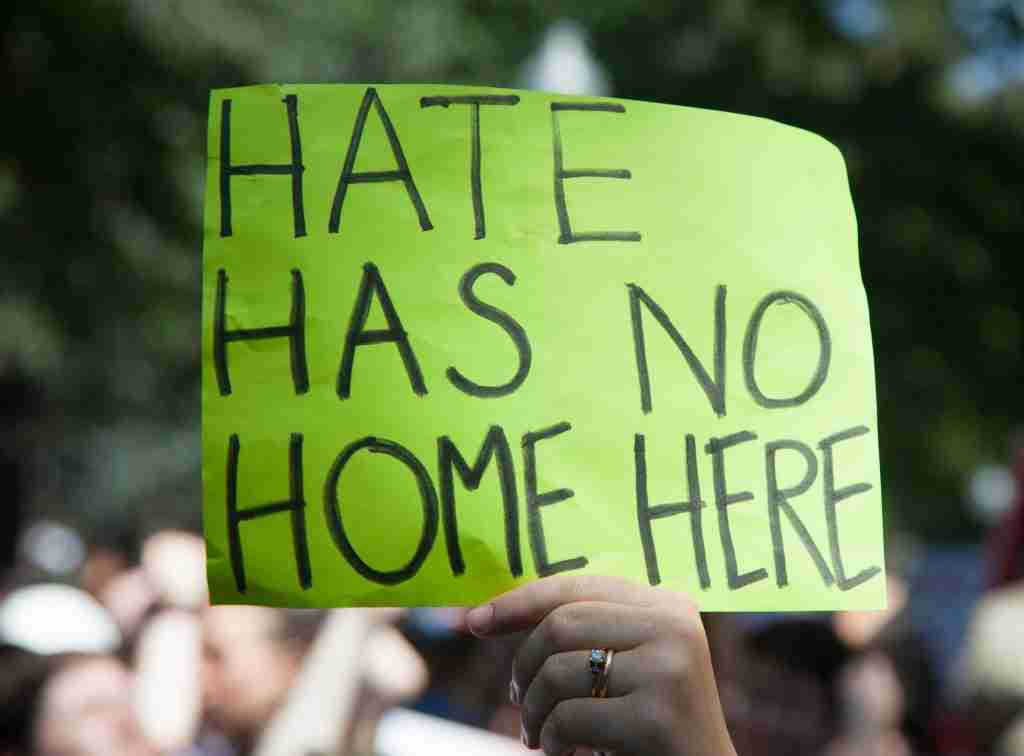
Hate speech is thus an attack on civil society and a mind-controlling brain hack that blunts empathy; creates division, anger, and fear; and normalizes cruelty.
This creates a permission structure for violence and a malignant normality in the population, which can lead to great harm.
Hate speech breaks brains, and can break society.
 Adobe stock image by JP Photography, licensed by Ravi Chandra
In the 2015 documentary The Brainwashing of My Dad (available on Prime), the filmmaker showcases how her kind father turned cruel and racist after listening to shock jocks and Fox News but then reverted to his former self years later when his TV could no longer access Fox. We are what we eat, and we become what we watch and hear, a process I call “psychic cloning.” Active resistance is required to immunize ourselves against this process.
Derogatory speech is certainly a strategy that slings mud, bullies, and berates an opponent with “trash talk,” but it also attempts to advance a hierarchy and abusive power structure while idealizing the speaker and contemptuously devaluing their opponent.
Derogatory speech threatens to distort public dialogue and understanding of issues of substance, as well as dehumanize anyone who disagrees, thus creating a push toward conformity and obedience out of fear of being attacked.
(I edited out the following section in bold when I resubmitted the article, but it was then fully declined.)
In The Apprentice (2024), a perhaps fictionalized Roy Cohn mentors a young Donald Trump in his “winning” strategy in the 1970s and 80s:
Attack, attack, attack!
Admit nothing, deny everything
Never admit defeat
Play the man, not the ball (in other words, attack your opponent, as opposed to the issues. Every competition becomes personal, vindictive, manipulative, and cruel, even Machiavellian.)
We’ve had ample evidence for these strategies in Mr. Trump’s behavior since 2015 at the very least. Whether his followers consider these signs of personal strength, entertainment, or necessary tactics to tar, feather, scapegoat, and defeat opponents, they have become part of the Republican and far-right discourse, and amplified through a right-wing media echo chamber. As such, they do threaten to distort public dialogue and understanding of issues of substance, as well as dehumanize anyone who disagrees, thus creating a push towards conformity and obedience out of fear of being attacked.
In America, we have broad protections for speech under the First Amendment. So far, the only unprotected speech is “obscenity, defamation, fraud, incitement to lawlessness, fighting words, true threats (as opposed to political hyperbole), speech integral to criminal conduct, and child sexual abuse material.” Each of these examples of unprotected speech has gray areas that can be contested in court.
Barring any changes in legislative and judicial interpretations of unprotected speech, what we have left are these antidotes:
Engage in more free speech opposing hate speech.
Establish norms of acceptable speech.
Vigorously call out harmful speech and interpret its intent while compassionately noting possible character and cultural pathologies in the speaker.
Rigorously detail the impact of harmful speech through science and journalism.
Actively deconstruct our own tendencies to cruelty that give hate speech and contempt a grip on our psyches.
Collectively, we have to create a transitional space of allyship, solidarity, strength in diversity, and kindness to transform the toxicity that is likely to come our way in the coming days, weeks and years. The past is prologue.
As a psychiatrist and concerned citizen, I am sitting with profound sadness that a permission structure for cruelty seems to have advanced in our democratic republic. I hope all people of conscience and goodwill can unite to prevent harm and promote the goodness that is at the heart of our humanity.
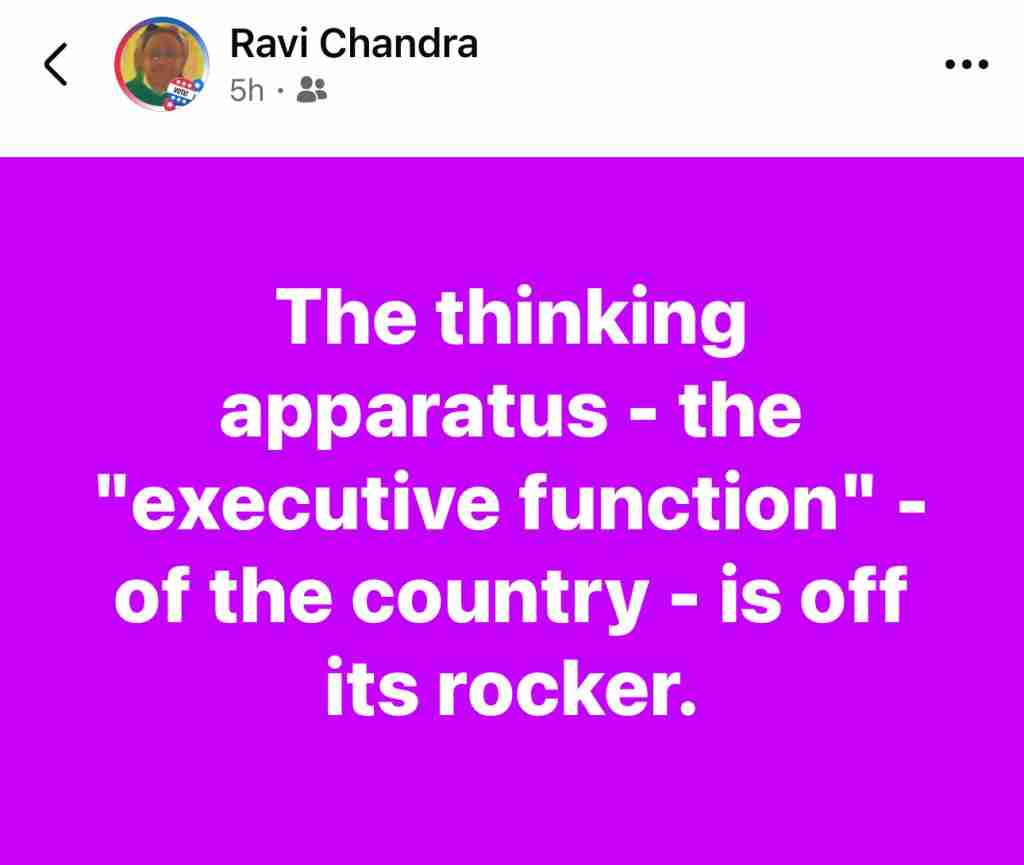
Dear readers: this essay was originally submitted 11/9/24 to my Pacific Heart expert blog at Psychology Today. Editors there have previously published essays critical of Donald Trump’s racism (such as this one published in March, 2020, which received over 117,000 views). However, beginning around October, 2022, something changed at PT. Their current editorial guidelines read “With regard to the 2024 election, PT will decline to publish partisan opinion pieces, per our editorial guidelines. We are open to objective, evidence-based content on political topics.” They held this article up over the long weekend, then sent it back to me for revisions to remove supposedly “partisan” references. I resubmitted, removing the section below in bold. But they then declined it completely. I’ve had similar experiences with multiple essays in the last two years. It seems PT will no longer publish psychologically-informed analyses of Mr. Trump or Republicans, ostensibly because they are considered “partisan,” but to my mind, out of lèse-majesté, or what Timothy Snyder calls “obeying (an autocrat) in advance.” It’s honestly become too disheartening to engage with their process, so I will likely just publish those types of articles here at East Wind. To date, the majority of my work at these two sites has been voluntary. I’ve published 41 essays at Psychology Today and East Wind eZine this year alone. However, I’m now needing to ask readers to donate to me directly, in order to support my compassionate work including my writing. (You could also donate to East Wind at the link above, to support all our writers.) I’m asking now because circumstances are requiring me to take a break from my work as a psychiatrist in order to devote more time to unpacking what’s happened, and develop a compassionate response through writing and other engagement through my compassion nonprofit, SF Love Dojo. You can also become a paid or founding subscriber to my Substack. Thank you for your support and readership. And if you’d like to send PT feedback on their editorial policies, you could try compassionately and kindly tweeting them. I’m considering some kind of protest action, but I’m going to get feedback from other writers first. I don’t want to be hasty, as I do believe they provide an important service. But the avoidance of social and political psychology is part of the fouling up of “the thinking apparatus” of the nation which led to the 2024 election results. If psychology, psychiatry, and journalism can’t think and speak on these issues, what chance does the electorate have?
© 2024 Ravi Chandra, M.D., D.F.A.P.A.
References and for further reading:
Liu N. “Your body, MY choice”: Emboldened far-right men taunt women on social media after Trump win. Salon, November 8, 2024
Following Election, American Extremists Celebrate and Call For Violence Against the Communities Trump has Targeted. Global Project Against Hate and Extremism, November 6, 2024.
Authoritarians, Far-Right Extremists and Racist Street Activists Worldwide Cheer Donald Trump’s Victory. Global Project Against Hate and Extremism, November 8, 2024.
Negussie T, Ghebremedhin S, Pereira I, Alfonseca K. Teens around US report receiving racist text messages. ABC News, November 11, 2024
Killion VL. The First Amendment: Categories of Speech. Congressional Research Service, March 28, 2024.
Chandra R. MOSF 16.9: An Ugly Truth: Social Media, the American Psyche, and Preventing Civil War. November 27, 2021.
Tirrell L. Genocidal Language Games. In Ishani Maitra & Mary Kate McGowan (eds.), Speech and Harm: Controversies Over Free Speech. Oxford: Oxford University Press. pp. 174–221 (2012). Accessed at Academia.edu
Pluta A, Mazurek J, Wojciechowski J, Wolak T, Soral W, Bilewicz M. Exposure to hate speech deteriorates neurocognitive mechanisms of the ability to understand others’ pain. Sci Rep. 2023 Mar 13;13(1):4127. doi: 10.1038/s41598-023-31146-1. PMID: 36914701; PMCID: PMC10011534.
Murphy RJ. Depersonalization/Derealization Disorder and Neural Correlates of Trauma-related Pathology: A Critical Review. Innov Clin Neurosci. 2023 Jan-Mar;20(1-3):53-59. PMID: 37122581; PMCID: PMC10132272.
Emma-Louise Jay, Mauricio Sierra, Frederique Van den Eynde, John C. Rothwell, Anthony S. David. Testing a Neurobiological Model of Depersonalization Disorder Using Repetitive Transcranial Magnetic Stimulation. Brain Stimulation, Volume 7, Issue 2, 2014, Pages 252-259, ISSN 1935-861X, https://doi.org/10.1016/j.brs.2013.12.002.
Mantovani A, Simeon D, Urban N, Bulow P, Allart A, Lisanby S. Temporo-parietal junction stimulation in the treatment of depersonalization disorder. Psychiatry Res. 2011 Mar 30;186(1):138-40. doi: 10.1016/j.psychres.2010.08.022. Epub 2010 Sep 15. PMID: 20837362.
Büetiger JR, Hubl D, Kupferschmid S, Schultze-Lutter F, Schimmelmann BG, Federspiel A, Hauf M, Walther S, Kaess M, Michel C, Kindler J. Trapped in a Glass Bell Jar: Neural Correlates of Depersonalization and Derealization in Subjects at Clinical High-Risk of Psychosis and Depersonalization-Derealization Disorder. Front Psychiatry. 2020 Sep 11;11:535652. doi: 10.3389/fpsyt.2020.535652. PMID: 33024435; PMCID: PMC7516266.
Dougherty E. Cutting Words May Scar Young Brains. Harvard Medical School News & Research, February 20, 2009
Byman DL. Commentary: How hateful rhetoric connects to real-world violence. Brookings Institution, April 9, 2021
 Photo by Bob Hsiang, 2022
Glad to have found you!
Thank you Satsuki. Your words bring me clarity and resolve. What I’ve been thinking this morning:
“Relationships are the highest form of spiritual practice. Democracy is the art of relationship. Love is our highest spiritual aim. We must learn to love each other, or fail our democratic mission.”
PT is an institution of democracy, and like many institutions it is flawed. There are biases and self interest – I might point to their pecuniary interests and their lack of understanding or care for harm done to vulnerable populations. That’s pretty much the story of our times in so many ways. Yet these are decent people. I’m hoping that I can continue my educational mission in some way at PT while also building a readership in a more enlightened ecosystem. I’m not going to give up, that’s for sure.
This poem by Langston Hughes hit me powerfully:
Freedom – https://www.poetryfoundation.org/poems/151031/freedom-5d7a48504dcd5
And working on my own analyses:
https://www.tiktok.com/t/ZP8LCHdkv/
Thanks Satsuki! I had hoped to read your book next but now have to place it alongside other urgent readings. I will get to it soon.
Thank you, Ravi, for your wise counsel. I am cancelling my subscription to Psychology Today. This is not a time to promote “nonpartisanship”, it is time that a journal like PT should be taking the lead in educating and thereby thwarting the dangers resulting from the unhinged powers of a malignant narcissist whose hateful speech, lies and distortions will unleash unspeakable harm directed at the most vulnerable members of our society. Where were the humanistic psychologist, psychiatrists, counselors and educators while Hitler was running amok? Carry on Ravi, we need your voice of sanity and compassion!